Manchester Museum has opened ‘Africa Hub’, a new type of space that exposes the information the Museum does not know about the African collections it cares for.
Many of these collections have sat in storage for years, key details absent from their object labels, highlighting the gaps in museum records. In many cases, all that is known about the objects is the name of the donor or the institution from which they were acquired.
Examples of the kind of pieces on display include a striking figure of a horse with an ibis on its back — this isn’t accompanied by any information about its name, community and country of origin or traditional use. All that is known is that it arrived at Manchester Museum after being donated by Mrs M A Bellhouse in 1976.
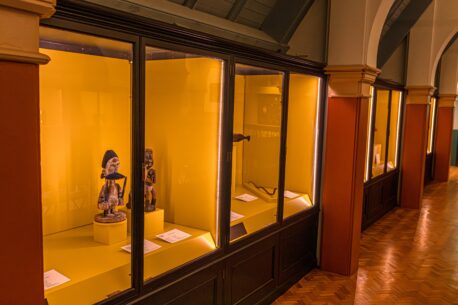
By taking an honest approach to the gaps in its knowledge, Manchester Museum says it hopes to start a process through which it can better understand the African collections it cares for and make collective decisions on how they can best inspire future generations.
That could mean restitution to communities of origin, but could also mean working with diaspora communities to develop new ways of sharing and celebrating cultural heritage.
In contrast to the objects about which little is known, there is a display co-curated with Igbo Community Greater Manchester (ICM) that tells rich stories about their cultural expression and heritage.
Members of ICM have worked closely with Lucy Edematie, Curator – African Collections from Colonial Contexts at Manchester Museum, to research objects within the collection that are connected to Igbo heritage. Their cultural knowledge and lived experience have been central to better understanding these objects and telling stories that will help museum visitors to connect with them.
Mr Anene Chiegboka, Chairman of Igbo Community Greater Manchester (ICM), said, “The organisation has an unwavering commitment to its partnership with Manchester Museum.
“This collaboration reflects a shared vision rooted in ICM’s dedication to preserving, promoting, and sharing the rich cultural heritage of the Igbo people through meaningful cooperation and inclusive engagement.
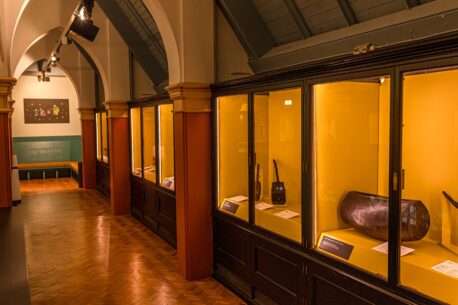
Honourable Mrs Sylvia Mgbeahurike, Vice-Chairlady of ICM Women wing, added: “Some of these objects were given, some were stolen, some were taken forcefully out of conquest. It is important that we start bringing them together again. It shows inclusiveness. It shows there is strength in diversity. It shows we are one people. Irrespective of our colour or where we are from. Something must hold us together.”
Manchester Museum cares for more than 40,000 objects from across Africa, many of which were collected during the period of the British Empire and arrived in Manchester through practices that included trade, anthropology, confiscation and looting. Existing documentation may record when an object entered the collection or who donated it, but often omits the maker, the original name, the cultural meaning or the community an object belonged to.
Lucy Edematie, Curator – African Collections from Colonial Contexts at Manchester Museum, added: “Unlike most galleries or exhibitions, which represent the culmination of years of research and collaboration, Africa Hub is the beginning. It builds on work the Museum has already been doing to engage with both diasporic communities and communities in Africa but provides an opportunity to extend this even further. It is a chance to do our thinking in public, with honesty and transparency, and to involve people in that process from the start.”
- Words:
- Bradley Lengden
- Published on:
- Thu 18 Dec 2025

