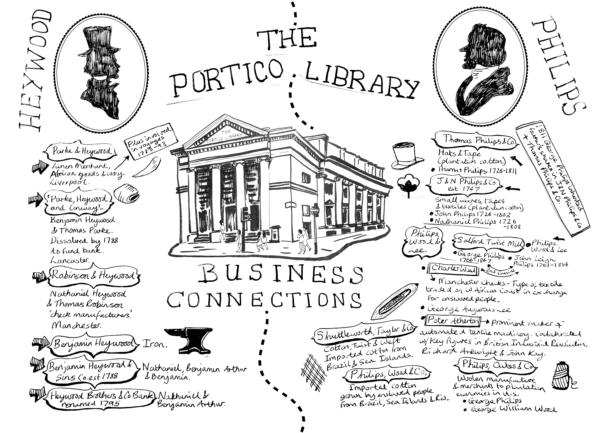
The Portico Library has shared groundbreaking new research into both its own and Manchester’s links to transatlantic slavery.
Manchester’s Global Threads team have discovered never-before-seen connections between the library and histories of enslavement, exploitation, and the resistance of enslaved people in the Caribbean. By bringing these human experiences to the forefront, The Portico hopes that the research can provide crucial context for ongoing reparative justice agendas.
The Portico Library counts among its list of influential members, former Prime Minister Robert Peel, Sir George Philips, a financier of the Manchester Guardian (now the Guardian), alongside others from Manchester’s male elite. Using cutting-edge research techniques, the research team have traced direct links between the Portico’s prominent members to transatlantic slavery and colonial economies across the globe – from Haiti, to Jamaica, Grenada, St. Lucia, the United States, and beyond.
Dr Thom Keep, CEO of The Portico Library, says: “This research not only helps to recover the lost connections to enslavement the Portico Library was built from, it also helps us understand Manchester’s past in a different way – helping us to imagine a future inspired by previously silenced voices and histories. We want to put these new research findings at the service of visitors and community members for reflection, and response, informing how they can help shape the future of the institution.”
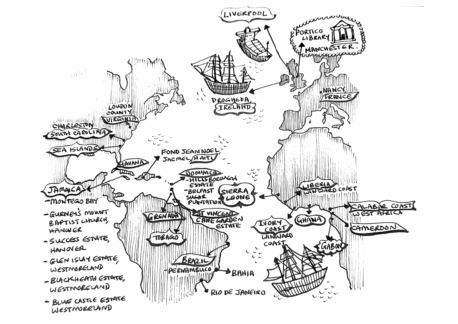
Jeevan Kaur Sanghera, Global Threads researcher, adds: “This research offers both an example and a foundation for meaningful engagement with the historic and ongoing impacts of Britain’s involvement in transatlantic slavery and colonialism, and their lasting effects on enslaved and colonised peoples and their descendants. These legacies and histories live on in our communities and in the physical spaces where we live, work, and learn. Institutions shaped by these histories have a responsibility to confront them with honesty and accountability to advance restorative justice and a more equitable future.”
This research was commissioned as part of the Portico Reunited project, funded by the National Heritage Lottery Fund. The research and case studies are now available to view online here. Marking the International Day for the Remembrance of the Slave Trade, the Portico will also be hosting a pop-up exhibition on Sat 23 Aug, between 12pm-4pm, during which free physical copies of the research will be made available. No need to book, and entry is free.
- Words:
- Bradley Lengden
- Published on:
- Thu 21 Aug 2025

