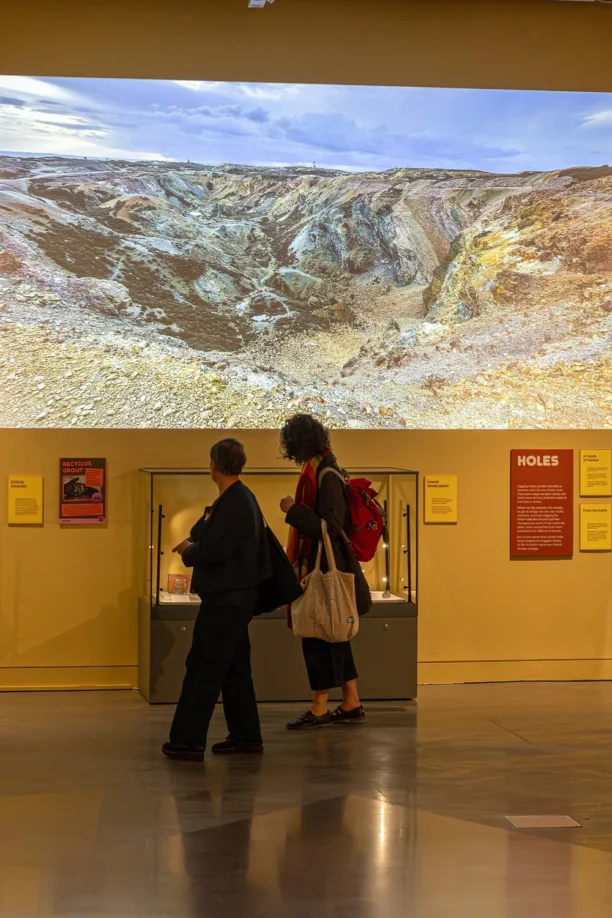
Manchester Museum has officially opened its new exhibition, Human Natures, which examines our complex and often exploitative dynamic with the natural world, charting the various ways in which everyday choices around food, fashion and consumption have reshaped environments across the globe.
Free to enter and running until Sun 1 Nov, the exhibition presents stories of overconsumption and environmental strain, confronting the consequences of ecological exploitation while spotlighting collective efforts to restore balance through more sustainable methods of living, with emphasis on local initiatives including Manchester Urban Diggers and Manchester Library of Things.
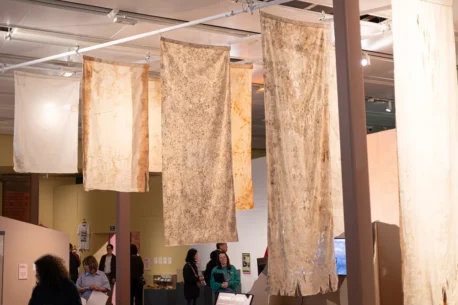
The immersive experience also incorporates a striking installation from the Cottonopolis Collective, which explores the environmental legacy of cotton production. Textiles woven at Quarry Bank Mill and later buried have been transformed through exposure to soil, air and water, revealing the residue of pollution and decay that are typically hidden from view. Suspended within the gallery, these altered fabrics provide a tactile and visual entry point into complex natural histories.
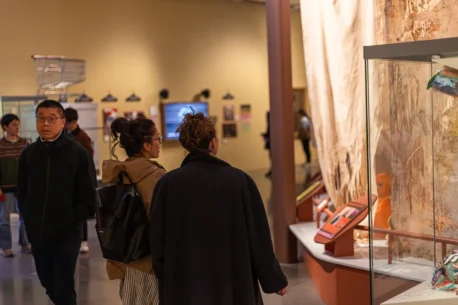
Structured as a journey through four distinct settings, Human Natures guides visitors from a warehouse to a waste dump, chronicling the lifecycle of materials and the ever-shifting forms of our interactions with nature. Early sections explore domestication and agricultural change, using examples like cats and chickens to show how we’ve remodeled species to meet our needs over time, while forests illustrate similar dynamics at a landscape scale.
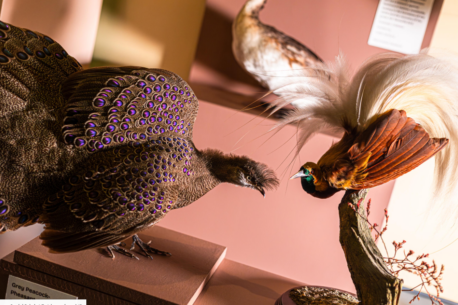
Then, the focus turns to clothing and the ethical implications of fashion through both historical and contemporary lenses. In this section, visitors can discover the remarkable story of Emily Williamson, whose campaign against the Victorian plumage trade began at her Fletcher Moss home and led to the creation of what would become the Royal Society for the Protection of Birds.
Elsewhere, the exhibition interrogates the realities of fast fashion and throw-away culture, particularly the imbalanced movement of textile waste across the planet. The work of Accra-based non-profit The Or Foundation highlights how discarded clothing from the Global North accumulates in places like the Ghanaian capital, prompting urgent questions about responsibility, inequality and the true cost of transient materialism.
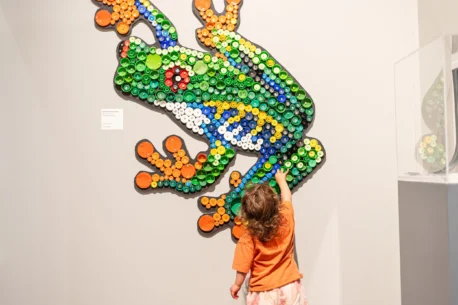
The final segment of the exhibition features a series of inspiring calls to action, with rolling residencies showcasing ongoing environmental and social justice work from MUD, LOT and London Mining Network, all of whom are partnered with the museum’s Top Floor Hub. Visitors can also engage with research into plastics at the University of Manchester and see breathtaking murals by Stockport’s Plastic Shed.
For more information on Human Natures, click HERE.
- Words:
- Wolf McFarlane
- Published on:
- Fri 15 May 2026

